
O₂ Resort Private stay in Valle de Guadalupe.
Valle de Guadalupe wine does not taste like wine from anywhere else. Not like Napa. Not like Rioja. Not like the Rhone. The comparison is tempting because the valley grows some of the same grapes, but the resemblance ends there.
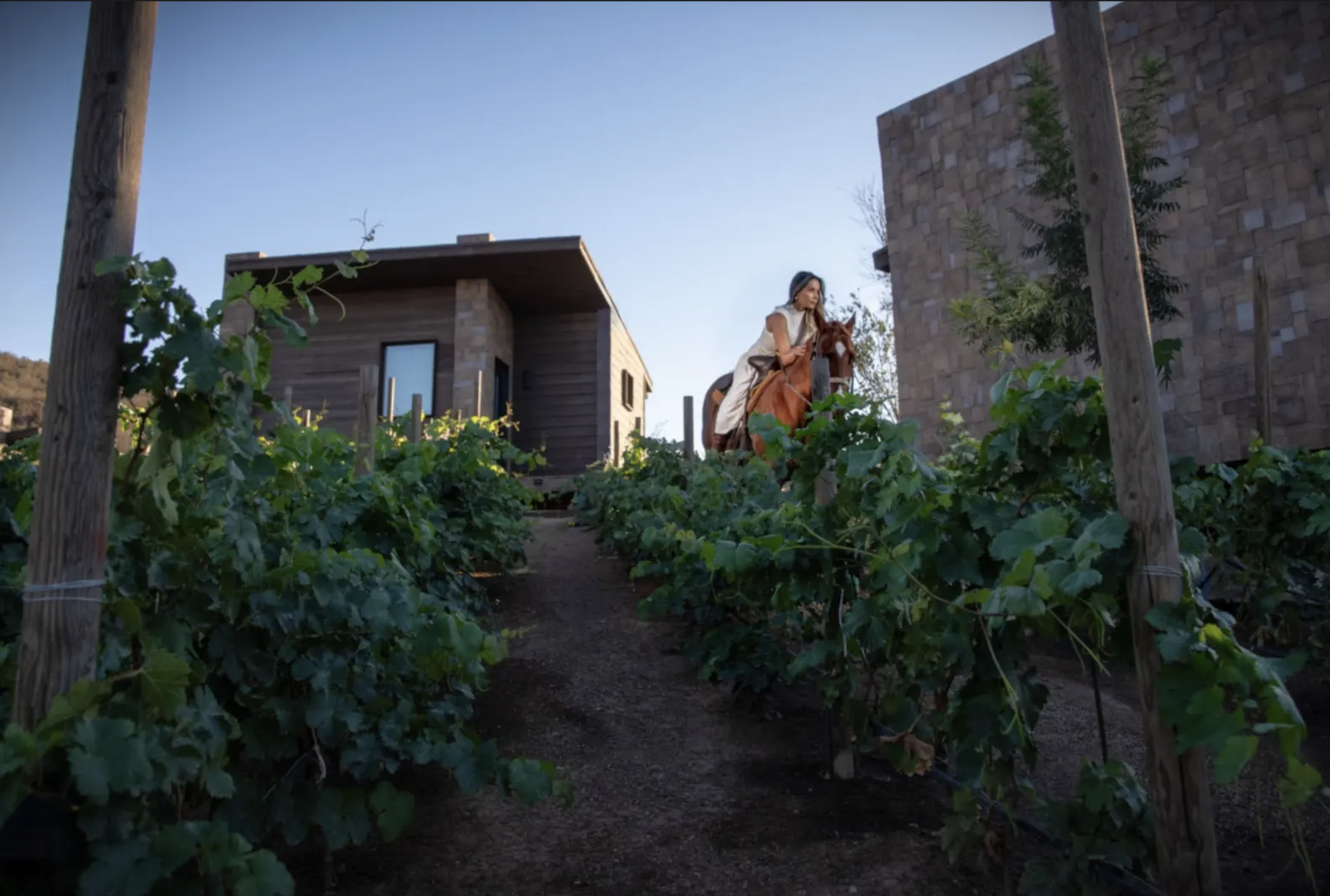
The volcanic soil, the Pacific influence, the Mediterranean heat, and the experimental spirit of the winemakers combine to produce a regional profile that belongs entirely to this valley in Baja California. Understanding that profile before you taste transforms a pleasant glass into a revelation. You stop asking whether you like the wine and start understanding why it tastes the way it does. Valle de Guadalupe wine rewards this kind of attention because the story behind each bottle is as rich as the liquid inside it. O2 Resort sits within this wine region, surrounded by the vineyards that produce the wines served at dinner. Staying at the property means tasting Valle de Guadalupe wine not as an imported curiosity but as a direct expression of the land outside your cabin porch. The connection between glass and ground is immediate, and it changes how every pour lands. Valle de Guadalupe wine begins in the soil, and the soil here is unlike the rich, loamy earth that produces wine in most famous regions. The ground is rocky, volcanic, and mineral dense. It drains fast and holds little moisture, which forces vine roots deep into fractured rock searching for water. This stress concentrates flavor in the grapes. Fewer, smaller berries with thicker skins produce juice that carries intense color, concentrated fruit, and a mineral backbone that runs through virtually every Valle de Guadalupe wine like a signature. The terrain adds complexity. Vineyards occupy hillsides facing different directions. An east facing slope receives gentler sun and produces grapes with higher acidity. A south facing slope gets full exposure and develops riper, rounder fruit. This variation within a compact valley means that the same grape variety planted on two neighboring hills can produce noticeably different wines. The terroir is not uniform. It is a mosaic, and Valle de Guadalupe wine reflects every piece. The most distinctive factor shaping Valle de Guadalupe wine is the Pacific Ocean less than thirty minutes west. Every afternoon, cool marine air flows through gaps in the coastal hills and settles into the valley. This breeze lowers temperatures during the critical ripening hours, slowing sugar accumulation and preserving the natural acidity that gives wines structure and freshness. Without this Pacific influence, the valley's warm climate would produce overripe, heavy wines. With it, the wines carry a tension between warmth and brightness that is the hallmark of the regional profile. The ocean also contributes a subtle salinity. White wines and rosados from the valley often carry a mineral saltiness that connects them to the coast. This quality is not common in inland wine regions and is one of the characteristics that makes Valle de Guadalupe wine immediately recognizable to attentive tasters. Check options through the resort accommodations page. Valle de Guadalupe wine is produced from a wide range of grape varieties, and the diversity is part of what makes the regional profile exciting. Tempranillo is one of the most planted reds. In this valley, it produces wines with soft tannins, warm fruit, and a mineral finish that distinguishes it from Spanish tempranillo. The Baja version is its own expression, shaped by volcanic soil and Pacific air. Nebbiolo thrives in the valley's rocky terrain. Valle de Guadalupe nebbiolo carries an earthiness and tannic structure that rewards aging, and the best examples rank among the most compelling wines the region produces. Cabernet sauvignon and grenache are widely planted and often appear in blends. The cabernet brings structure. The grenache brings warmth and spice. Blended together or with other varieties, they produce some of the valley's most complex and age-worthy Valle de Guadalupe wine. Among whites, chenin blanc performs beautifully. The valley's warm days develop tropical fruit character while the cool nights preserve acidity. Viognier adds aromatic richness. Sauvignon blanc delivers crisp, mineral driven whites that pair naturally with the region's Pacific seafood. One of the most distinctive aspects of Valle de Guadalupe wine is the freedom with which winemakers blend. Established wine regions operate within strict appellation rules that dictate which grapes can be combined and in what proportions. Valle de Guadalupe has no such constraints. Winemakers blend tempranillo with cabernet. They combine nebbiolo with grenache. They create assemblages that would be illegal in the regions where those grapes originated. This freedom produces wines that cannot be categorized by European standards. They are not Bordeaux blends or Rhone blends or Spanish blends. They are Valle de Guadalupe blends, born from the winemaker's intuition and the specific character of the grapes the valley produced that year. The blending culture is one of the reasons the regional profile feels young, bold, and genuinely inventive. Browse the setting through the resort gallery. Valle de Guadalupe wine is shaped as much by the people making it as by the land. The valley's winemakers are a mix of formally trained enologists and self-taught experimenters. Some studied in Europe and returned to apply classical technique to Mexican terroir. Others learned by doing, guided by instinct and each harvest. This diversity produces a remarkably varied regional profile. What unites them is ambition. They are building a regional identity, and each vintage pushes the conversation forward. The best Valle de Guadalupe wine carries the confidence of people who know their land and express it without apology. Understanding Valle de Guadalupe wine transforms when you taste it in the valley where it was made. At O2 Resort, the outdoor restaurant features local wines paired with regional Baja California cuisine. Pacific seafood with a mineral white. Fire grilled meats with a structured red blend. The pairings are geographic, food and wine from the same land, and the combination reveals qualities in the wine that tasting in isolation misses. The salinity of a white becomes vivid when paired with ceviche. The mineral backbone of a red becomes profound when paired with oak grilled lamb. Dining outdoors adds another layer. The hills where the grapes grew are visible from your table. The evening light shifts across the vineyards as the wine opens in your glass. The setting does not just accompany the tasting. It completes it. Discover the dining at o2resortvalledeguadalupe.com. Beyond the property, the valley's 100 plus wineries offer the chance to taste Valle de Guadalupe wine at the source. The team at O2 Resort recommends visits based on your palate, matching you with producers whose style aligns with what you enjoy. See amenities through the resort amenities page. Two to three nights at O2 Resort provides time to explore Valle de Guadalupe wine through multiple channels. Winery visits offer education. Dinner pairings offer context. Conversations with winemakers offer story. And the bottle you bring back to your cabin porch, tasted as the valley goes golden, offers the quiet understanding that comes from drinking a wine in the place that made it. The valley is about an hour south of San Diego via the San Ysidro border crossing. A valid passport is required. Learn more in the about section.The Terroir
The Pacific Influence
The Grapes
The Blending Culture
The Winemakers
Tasting the Profile at O2 Resort
Building Your Knowledge

Volcanic soil, Pacific ocean influence, Mediterranean climate, and a blending culture unconstrained by appellation rules produce wines with mineral depth, bright acidity, and bold, inventive character. Tempranillo, nebbiolo, cabernet sauvignon, and grenache lead the reds. Chenin blanc, viognier, and sauvignon blanc produce distinctive whites. Blends are central to the regional identity. Yes. The outdoor restaurant features Valle de Guadalupe wine paired with regional cuisine. The pairings are geographic, connecting food and wine from the same valley. Many producers sell exclusively from their tasting rooms. Visiting the valley is often the only way to taste and purchase these wines, making the trip essential for wine enthusiasts. No. The informal, welcoming atmosphere of the valley's wineries makes Valle de Guadalupe wine accessible to all experience levels. Curiosity is the only prerequisite.Frequently Asked Questions (FAQs)
1. What Makes Valle de Guadalupe Wine Unique?
2. What Are the Main Grape Varieties?
3. Can I Taste Local Wines at O2 Resort?
4. Are the Wines Available Outside the Valley?
5. Do I Need Wine Knowledge to Appreciate the Region?