
O₂ Resort Private stay in Valle de Guadalupe.
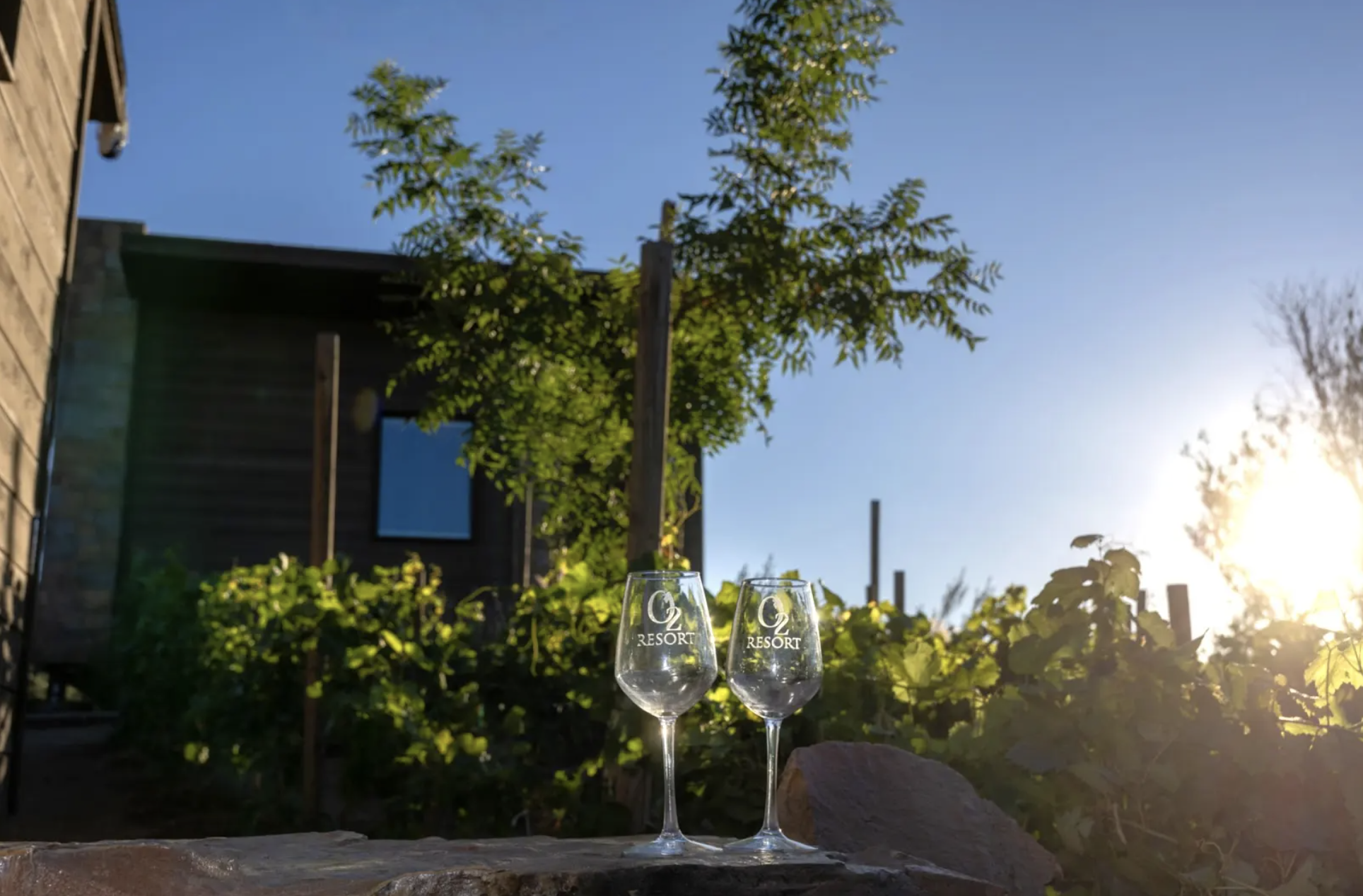
Valle de Guadalupe vineyards are not a backdrop to the wine experience. They are the wine experience. Every bottle produced in this valley begins in the soil between these rows of vines, shaped by the same sun, wind, and mineral earth that you see from your cabin porch at O2 Resort.
Understanding the vineyards, what they look like, what they endure, and what they produce, transforms wine tasting from a pleasant activity into a relationship with the land.
When you know what the vines went through to produce the grapes in your glass, the wine carries weight it did not have before. Valle de Guadalupe vineyards are where Baja's wine culture lives, and visiting them is as essential as visiting the tasting rooms.
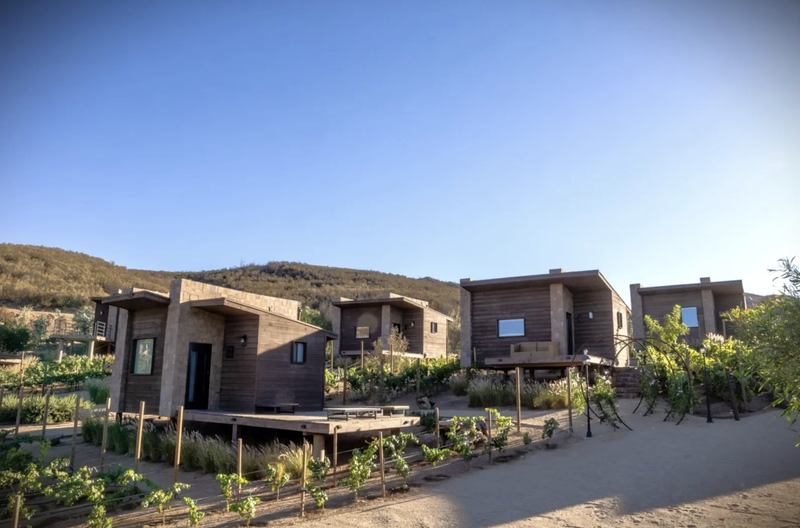
O2 Resort sits within this vineyard landscape. The hills and planted rows visible from every cabin porch are not decorative. They are the working agricultural land that produces the wines you drink at dinner. Staying at the resort means waking up inside the story that every bottle in the valley is trying to tell.
The Land Beneath the Vines
What makes Valle de Guadalupe vineyards distinctive starts underground.
The soil is rocky, volcanic, and mineral dense. It drains quickly, forcing vine roots deep into fractured rock searching for water. This stress is intentional. Struggling vines produce fewer grapes with concentrated flavor, complexity, and the mineral signature that defines the valley's wines.
The terrain is not flat. Valle de Guadalupe vineyards climb hillsides and follow contours facing different directions. East facing vineyards catch morning sun and stay cooler. South facing receive full exposure. These orientations create microclimates within the same valley, which is why neighboring wineries produce dramatically different wines.
You see this diversity from the roads around O2 Resort. One hillside grows tight, stressed rows for intense reds. The next carries broader vines trained for airflow, producing bright whites. Check options through the resort accommodations page.
The Climate That Shapes Everything
Valle de Guadalupe vineyards thrive because of a Mediterranean climate refined by the Pacific Ocean.
The ocean sits less than thirty minutes west. Every afternoon, cool marine air flows through coastal gaps and settles into the valley, lowering temperatures, slowing ripening, and preserving acidity. Without the Pacific, the wines would be heavy. With it, they carry brightness and tension.
Days are warm and dry with abundant sunshine, developing ripe fruit flavors. Nights are cool, slowing sugar accumulation and building complexity over a longer season. Rainfall is rare. Valle de Guadalupe vineyards rely on careful irrigation and the deep roots that rocky soil demands. This controlled stress is part of what makes the wines intense.
What the Vineyards Look Like
Part of the pleasure of visiting Valle de Guadalupe vineyards is the visual experience. The vines are beautiful, and they change through the year.
In spring, the vineyards are bright green. New growth emerges from dormant wood, and the rows come alive with leaf and tendril. The hills behind them are also green from winter rain, creating a lush landscape that feels almost tropical despite the dry Mediterranean climate. This is the valley at its freshest.
By summer, the canopy is full and dense. The leaves provide shade for the developing fruit, and the clusters hang in dappled light.
The hillsides have dried to golden brown, and the contrast between green rows and golden earth gives Valle de Guadalupe vineyards their most iconic look. This is when the valley photographs best and when the energy of the growing season is most palpable.
Late summer and early fall bring harvest. The grapes deepen in color. The air carries a faint sweetness from ripening fruit. Winery crews move through the rows in early morning, picking by hand, racing the warmth.
Visiting Valle de Guadalupe vineyards during harvest is witnessing the moment when a year of farming becomes wine. Browse the setting through the resort gallery.
Winter strips the vines to their architecture. The leaves drop. The canes stand bare against the sky. The vineyards are quiet and structural, revealing the shape of each vine and the spacing of each row.
There is a beauty in dormant vineyards that most visitors never see because they visit only in the warm months. The winter landscape has a minimalism that matches the clean design of O2 Resort itself.
Walking the Vineyard Landscape
Many Valle de Guadalupe vineyards welcome visitors to walk their rows. This adds a dimension tasting rooms cannot provide.
Standing inside a vineyard changes your relationship with wine. The soil crunches underfoot, rocky and pale. Leaves rustle in the Pacific breeze. Clusters hang at eye level showing variation in color and size.
You notice the bark on older vines, gnarled from years of pruning. The soil between rows is sparse. This austerity produces concentrated wine. You understand, standing there, that great wine comes from controlled difficulty.
This understanding follows you into every tasting. The tempranillo tastes more complex because you saw the hillside. The white carries meaning because you felt the breeze. Valle de Guadalupe vineyards offer this education simply by letting you walk through them.
The Wines the Vineyards Produce
The grapes grown in Valle de Guadalupe vineyards produce wines with a character that belongs to this specific place.
The reds are structured, warm, and mineral. Tempranillo, nebbiolo, cabernet sauvignon, and grenache are among the most planted varieties, and the valley's winemakers often blend them in combinations that defy traditional regional rules.
The freedom to experiment is part of the culture, and the vineyards support it because the soil and climate coax quality from a wide range of grapes.
The whites carry salinity and freshness. Chenin blanc, viognier, and sauvignon blanc perform well in the Mediterranean climate, and the Pacific influence gives them an acidity that keeps them crisp. The rosados are dry and mineral, perfect for afternoon drinking on a terrace overlooking the rows that produced them.
At O2 Resort, these wines appear at dinner. The outdoor restaurant pairs regional Baja California cuisine with Valle de Guadalupe wines, and dining with vineyards visible in the fading light connects glass to ground in a way that no imported wine list can achieve. Discover the experience at o2resortvalledeguadalupe.com.
Visiting the Vineyards from O2 Resort
O2 Resort's position within the valley makes it the natural base for exploring Valle de Guadalupe vineyards.
The property is surrounded by vineyard land. The views from your cabin porch include rows of vines on nearby hillsides. Driving to any vineyard in the valley takes minutes, not hours.
And the team's knowledge of which producers welcome vineyard walks, which offer harvest experiences, and which settings provide the most dramatic views allows them to shape your visit around what moves you most.
A vineyard focused day from O2 Resort might include a morning walk through a small producer's rows, followed by a tasting of the wines those rows produced.
Lunch at a valley restaurant where the ingredients match the land. An afternoon return to the resort for the pool, the jacuzzi, and the porch. Dinner outdoors with local wines. Fire pit under stars that have watched over these vineyards for centuries. See amenities through the resort amenities page.
Two to three nights allows you to experience the vineyards at different times of day and from different vantage points. The morning light on the rows. The midday heat shimmering above the canopy. The golden hour glow that makes every vineyard look like it was painted. Learn more in the about section.
Frequently Asked Questions (FAQs)
Many wineries welcome visitors to explore their vineyard rows. The O2 Resort team can recommend producers that offer vineyard walks and explain the best timing for the experience. The most planted varieties include tempranillo, nebbiolo, cabernet sauvignon, grenache, chenin blanc, and viognier. Winemakers often create inventive blends that reflect the valley's experimental spirit. Late summer through early fall. This is the most dynamic time to visit Valle de Guadalupe vineyards, with picking crews in the rows and the energy of winemaking filling the valley. Cool afternoon breezes from the coast slow grape ripening and preserve acidity. This marine influence gives the valley's wines their distinctive brightness and structure. Yes. The property is surrounded by vineyard land, and the views from cabin porches include planted hillsides. The wines served at dinner come from these same Valle de Guadalupe vineyards.1. Can I Walk Through Valle de Guadalupe Vineyards?
2. What Grapes Are Grown in the Valley?
3. When Is Harvest Season?
4. How Does the Pacific Ocean Affect the Vineyards?
5. Can I See Vineyards from O2 Resort?